Post-Democracy Crypto
How Silicon Valley's libertarians became the most efficient political machine in American history.
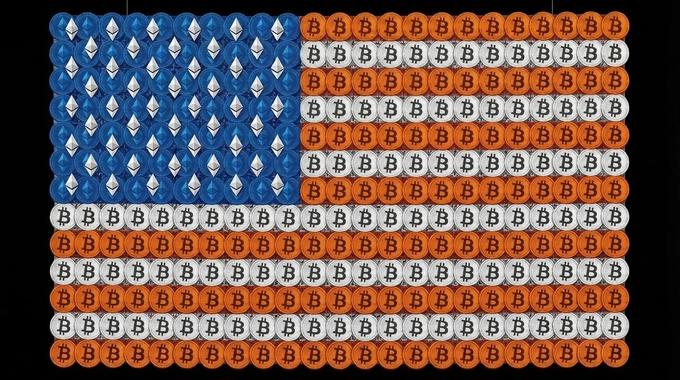
Post-Democracy Crypto
There is a word for a system in which political power and financial gain are no longer separate activities. We have been avoiding it, using softer language — "conflicts of interest," "self-dealing," "regulatory capture" — as though these are temporary malfunctions rather than the intended design. The cryptocurrency industry's relationship with the Trump administration is not a conflict of interest. It is a merger.
The numbers make the case without assistance. By some estimates, crypto firms spent over $245 million on the 2024 elections, more than any other industry. The returns were immediate and measurable. The Trump administration intervened to halt or terminate federal investigations and enforcement actions involving multiple cryptocurrency firms that had donated to the president or invested in his companies, including Coinbase, Gemini, Robinhood, Ripple, Crypto.com, Uniswap, and Kraken. In case the transaction was not clear enough, companies whose cases or investigations were dismissed — including Coinbase, Kraken, Ripple, Robinhood, and Crypto.com — donated at least $1 million each to Trump's inauguration.
This is not influence. This is a price list.
The architecture of what has been built is worth understanding precisely, because its elegance is genuinely impressive in the way that a confidence scheme is impressive — you find yourself admiring the mechanics even as you register what is being done. World Liberty Financial, the Trump family's DeFi protocol, concluded its public token sale netting $550 million. Of the proceeds, just over 75 percent goes to DT Marks DEFI LLC, a firm which Trump owns 70 percent of while his family owns the remaining 30 percent. The president of the United States launched a financial product, promoted it from the White House, and kept three quarters of the money. Trump reported income of more than $630 million in 2024, including $57 million from cryptocurrency sales alone.
The $TRUMP meme coin refined this model to its purest form. Launched days before his second inauguration, a Financial Times analysis found that the crypto project netted at least $350 million through token sales and fees in the first three weeks after launch. 58 crypto wallets made millions. 764,000 wallets lost money. The president then invited the biggest buyers to dinner at the White House. The mechanism could not have been more direct: send money to the president's personal financial instrument, get access to the president. This is not metaphorical corruption. It is the literal definition of it, conducted in public, on a blockchain, with full transaction transparency for anyone who cared to look.
Justin Sun is perhaps the most instructive figure in this ecosystem. Sun, a foreign citizen holding a passport from St. Kitts and Nevis, was facing a fraud lawsuit from the US Securities and Exchange Commission. He invested at least $75 million in World Liberty Financial and serves as an official adviser to the project. A few months after he started investing in Trump's cryptocurrencies, the SEC case was put on hold pending settlement talks. As a foreign national, Sun was legally barred from donating to US political campaigns. Investing in the president's personal financial vehicles, apparently, is a different matter.
The industry has been careful to maintain the language of libertarian idealism throughout — decentralisation, financial freedom, democratising access to capital. Brian Armstrong of Coinbase is particularly skilled at this register. His public statements position crypto as a civic project, a way of returning financial sovereignty to ordinary people. The actual political strategy operated somewhat differently. The crypto lobby has spent $271 million on the 2026 midterms alone, with Fairshake — backed by Coinbase, Ripple, Andreessen Horowitz, and others — using the money to run attack ads against candidates who have voted for consumer protections on digital assets. In Illinois, Fairshake labelled a progressive candidate as corrupt for supporting consumer rights legislation, while backing a rival who had voted for the industry's preferred stablecoin bill. The decentralisation rhetoric does not survive contact with the actual spending behaviour.
Marc Andreessen of Andreessen Horowitz — a former Democratic donor who remade himself as one of Trump's most prominent Silicon Valley allies — has been among the most candid about what the investment represents. What unites the roster of Trump's crypto allies — Andreessen, Peter Thiel, David Sacks, Changpeng Zhao, Michael Saylor, Brian Armstrong — is not ideology in any coherent sense. It is the recognition that an administration willing to dismantle oversight, pardon fraud convictions, and dismiss enforcement actions is worth purchasing, and that cryptocurrency is a convenient vehicle for doing so.
Trump issued a controversial pardon for former Binance CEO Changpeng Zhao, who had previously served four months in prison related to his exchange's lax anti-money laundering controls. Zhao's exchange had processed transactions for sanctioned entities, terrorist organisations, and drug markets. The pardon was welcomed warmly by the industry. Nobody noted the irony of a movement that claims to distrust government power celebrating a presidential intervention that erased a federal conviction in exchange for political loyalty.
The stablecoin battle currently underway in Congress clarifies the stakes for anyone still treating this as a conventional lobbying story. Trump personally intervened in the dispute between crypto firms and banks over whether companies like Coinbase can offer yields on stablecoins — a product that banks warn could siphon up to $6.6 trillion in deposits from the traditional banking system. "The Genius Act is being threatened and undermined by the banks, and that is unacceptable," Trump posted on social media, shortly after meeting Coinbase CEO Brian Armstrong at the White House. Coinbase shares rose 15 percent the same day. The president of the United States was publicly market-moving a stock in a company that had donated to his inauguration, his ballroom renovation, and his family's crypto ventures.
What the crypto-Trump alliance has produced is not, ultimately, a story about cryptocurrency. Crypto is the vehicle, not the destination. The destination is a system in which regulatory enforcement is available for purchase, in which the distinction between the president's personal financial interests and public policy has been formally dissolved, and in which political opposition can be neutralised through targeted spending in primary elections. Recent reports show crypto interests are amassing more than $250 million for the 2026 elections to get more pro-crypto candidates elected while driving out those standing in their way — focusing increasingly on Democratic primary races to insulate themselves from the effects of any future Republican defeat.
The technology is real. The blockchain is real. The libertarian ethos, if it was ever real, dissolved the moment it became more profitable to capture the state than to escape it. What the industry built, in the end, was not an alternative to the financial system. It was a more efficient mechanism for converting money into political power and political power back into money — a perpetual motion machine for the already wealthy, running on the enthusiasm of the retail investors who bought the tokens and absorbed the losses.
Decentralised finance. Centralised everything else.